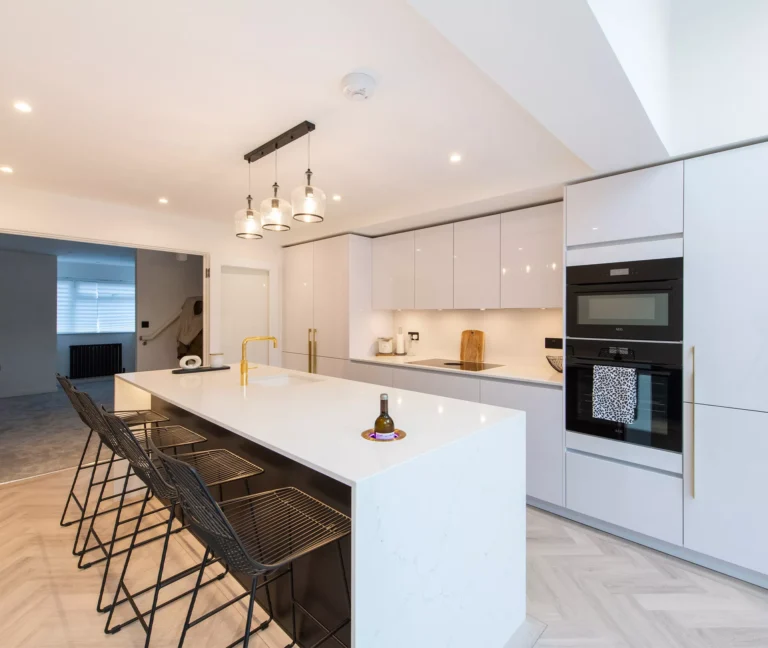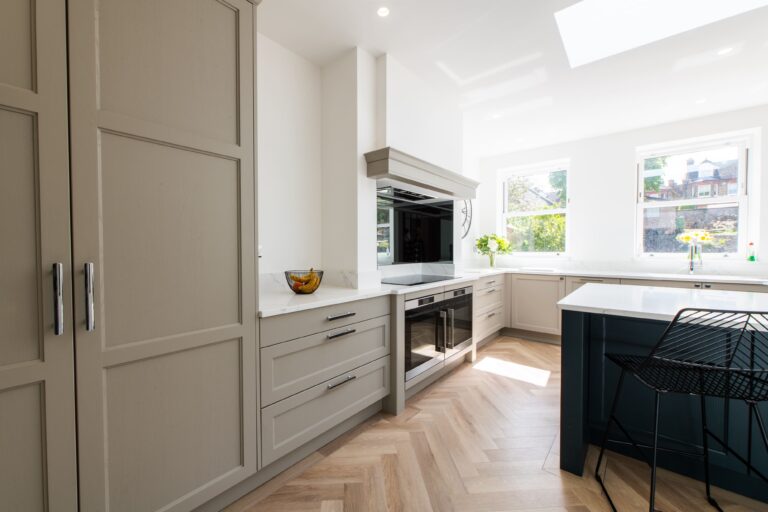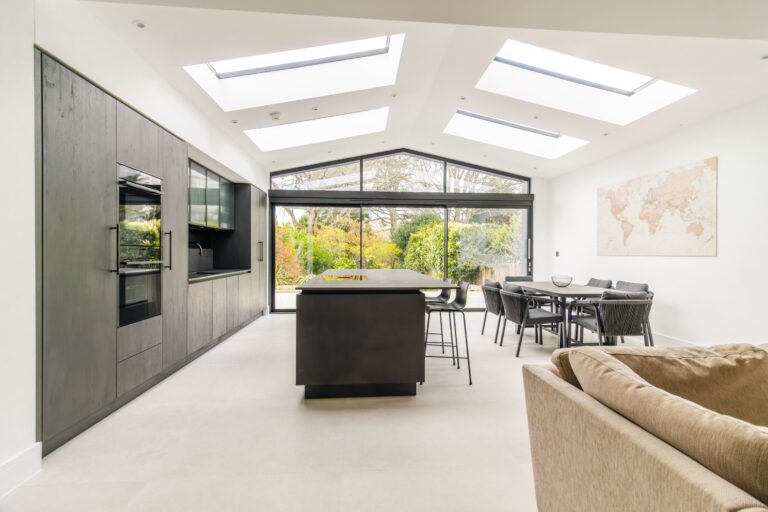
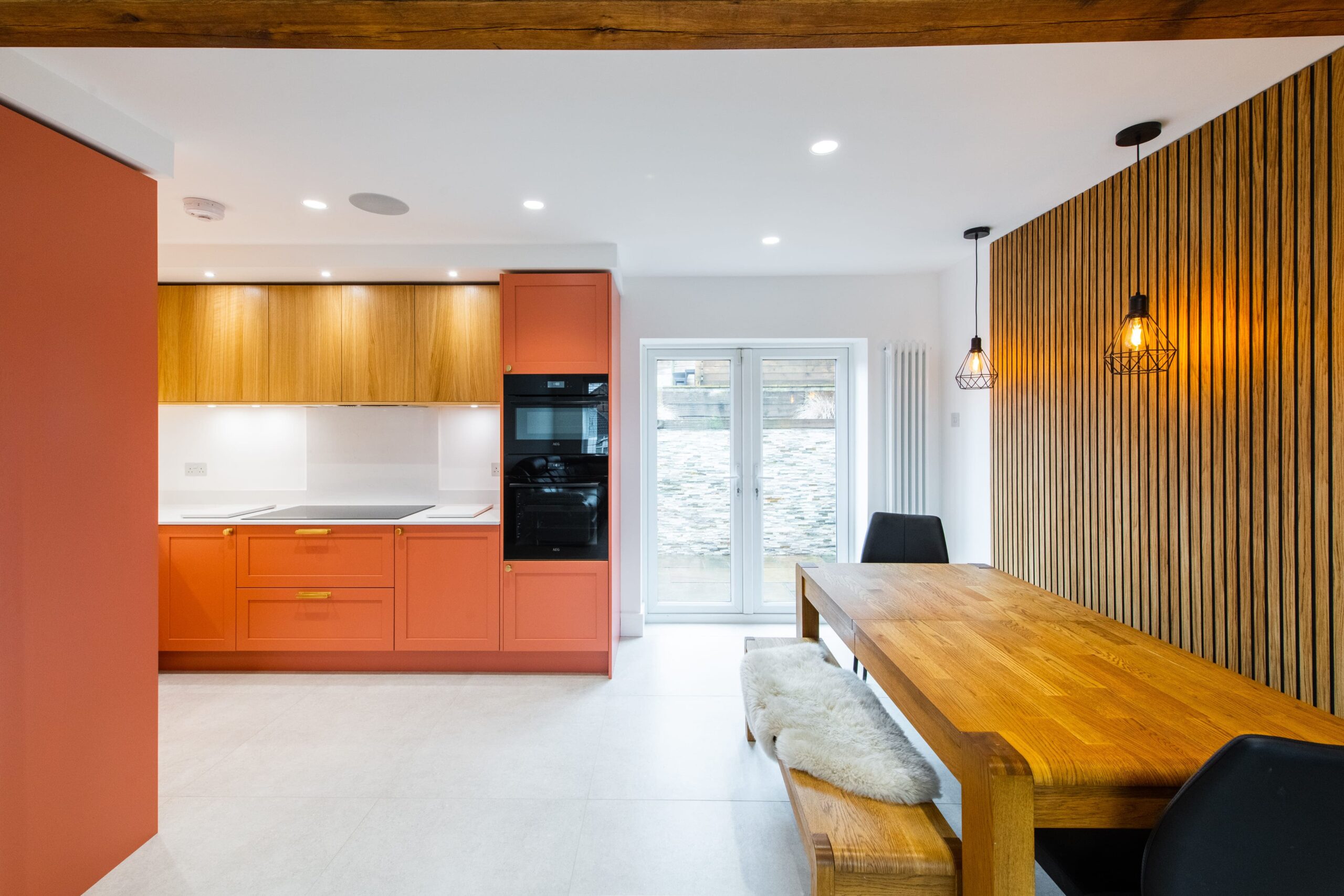
A well-designed kitchen is not simply a beautiful one, it is a kitchen that functions effortlessly. And at the heart of that effortless function is storage. Not just more of it, but better storage: the kind that is considered, bespoke to how you cook and live, and integrated so seamlessly into the design that it barely registers as a feature at all.
At Ornate Kitchens, storage planning is one of the most detailed and considered parts of the design process. Long before we discuss cabinet door styles or worktop finishes, we want to understand how a client uses their kitchen: what they cook, how often they shop, where they need things to hand, and what they want to hide completely. This guide shares the principles and solutions that shape our approach.
If you would like more tailored advice on how to maximise storage in your own kitchen, book a design appointment with Ornate Kitchens and speak with one of our designers.
Why Kitchen Storage Needs a Strategy, Not Just Space
More cupboards do not automatically mean a more organised kitchen. We regularly see clients who come to us having just refitted their kitchen and are already frustrated by their storage, not because there is too little of it, but because it has not been thought through. Deep corner units that swallow pans and never give them back. Wall cabinets that require a step ladder to access. Drawers that cannot close because they were sized for a generic kitchen rather than a real household.
The starting point for good kitchen storage is a proper audit of what you own and how you use it. Everyday items, the things you reach for multiple times a day, should be within easy reach of where you use them. Less frequent items can occupy harder-to-reach spaces. And the things you rarely need but cannot throw away (the bread maker, the fondue set) belong in utility cupboards or other rooms entirely.
The Best Kitchen Storage Solutions
Deep Pan Drawers
The shift from base cupboards to deep pan drawers is one of the most significant improvements in modern kitchen design. Where a base cupboard with a shelf requires you to crouch, reach to the back, and shuffle items to find what you need, a deep drawer presents its entire contents to you the moment you open it.
Drawers are more expensive than doors per unit, but the improvement in daily usability justifies the investment. A well-specified run of deep pan drawers, with internal organisers to separate pots, pans, lids, and baking trays, will transform how you interact with your kitchen every single day. At Ornate, we specify high-quality soft-close drawer systems from brands such as Hettich and Blum, which offer whisper-quiet operation and exceptional longevity.
Larder Units and Pull-Out Pantries
The larder unit is perhaps the most efficient storage solution in a kitchen by volume. A full-height larder cabinet, fitted internally with pull-out shelves, carousel baskets, or deep fixed shelves, can house a remarkable quantity of food: tins, dried goods, oils, condiments, cereals, in a single location, keeping your worktops completely clear.
For kitchens where a full-height larder is not possible, a pull-out pantry column, a narrow tower of tiered wire baskets that extends on runners, can be fitted into gaps as narrow as 150mm. These are particularly useful in galley kitchens or in any run of cabinetry where space is at a premium.
Internal Drawer Organisers and Cutlery Inserts
The devil is in the detail with kitchen drawers. A drawer full of loose utensils is barely more functional than a drawer full of loose anything. Bespoke internal organiser systems: fitted to the exact dimensions of each drawer – make a profound difference. Cutlery trays, spice inserts, knife blocks, and utensil dividers all help to give every item a designated home.
What separates a truly bespoke kitchen from a fitted one is that these inserts are designed around your actual possessions. We discuss what goes in each drawer at the design stage, which means the finished kitchen has a place for everything, rather than a generic insert that your belongings have to be made to fit.
Corner Solutions
Corners are the most challenging area of any kitchen layout, and the history of kitchen design is littered with solutions that do not quite work. The traditional carousel is convenient in theory but wasteful in practice, the curved shelves leave significant dead space. Modern alternatives are considerably better:
Le Mans pull-out systems: Two D-shaped shelves that extend outward when the door opens, bringing the full contents of the corner into the room.
Magic corner units: A double-shelf mechanism attached to the inner door that swings out into the kitchen, making even the deepest corner fully accessible.
Drawer banks wrapping around corners: In some layouts, it is possible to design continuous drawer runs that navigate around a corner entirely, eliminating the problem rather than solving it.
The right solution will depend on your layout and corner configuration. Our designers will advise which mechanism suits your specific kitchen best.
Tall Housing Units and Built-In Appliances
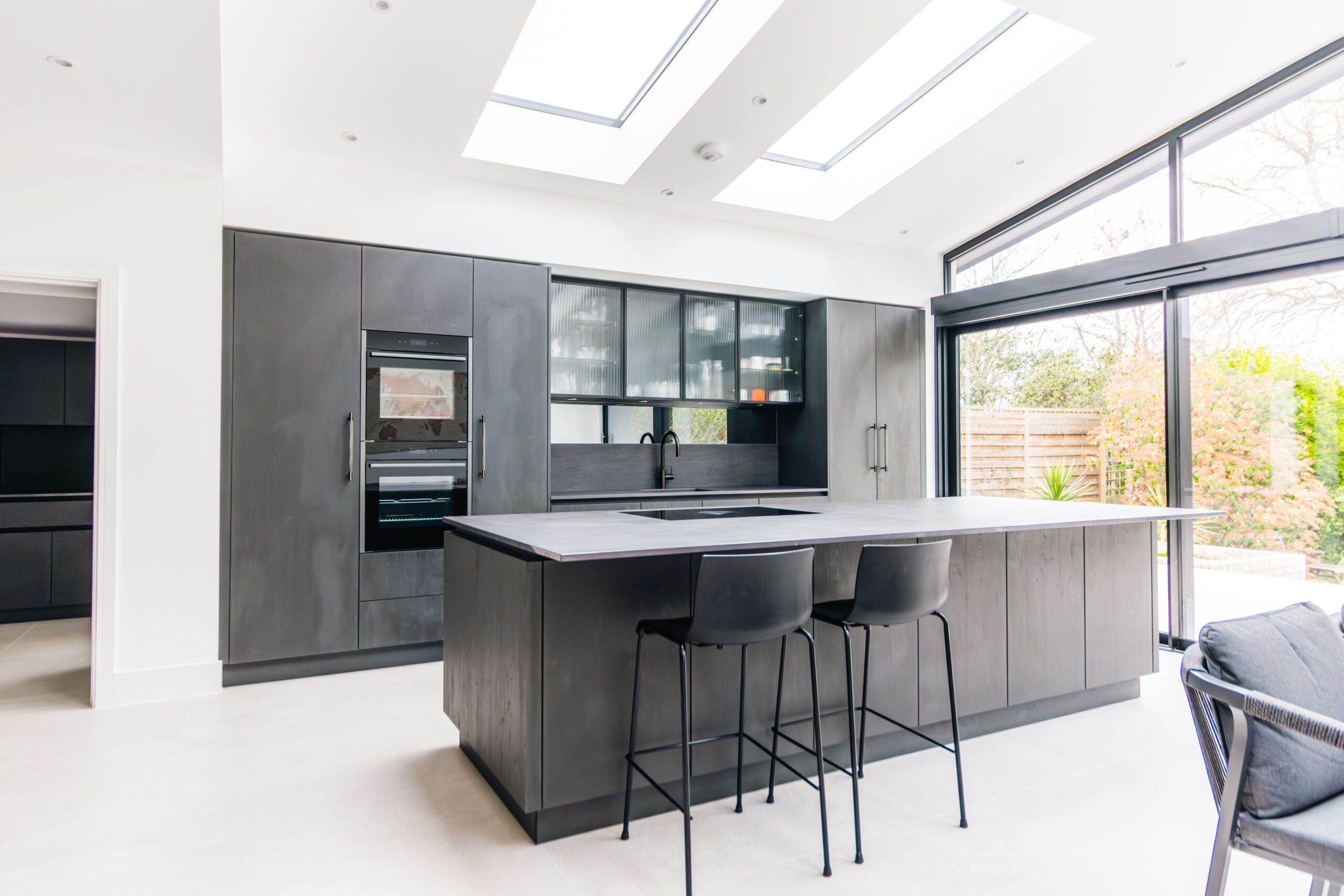
Tall housing units: columns of cabinetry that run from floor to ceiling, offer exceptional storage capacity and are also the natural home for built-in appliances such as ovens, combi-microwaves, warming drawers, and coffee machines. Integrating appliances at eye level is not simply an aesthetic choice (though it does look considerably more refined than a freestanding range); it is a practical one. Ovens at standing height are safer and easier to use, and housing units can be designed to include storage above, below, and beside each appliance.
A well-designed housing tower can contain two ovens, a warming drawer, a microwave, and a significant volume of tall storage – all within a footprint of roughly 600mm. When space is limited, this kind of vertical thinking pays real dividends.
Open Shelving – Used with Intention
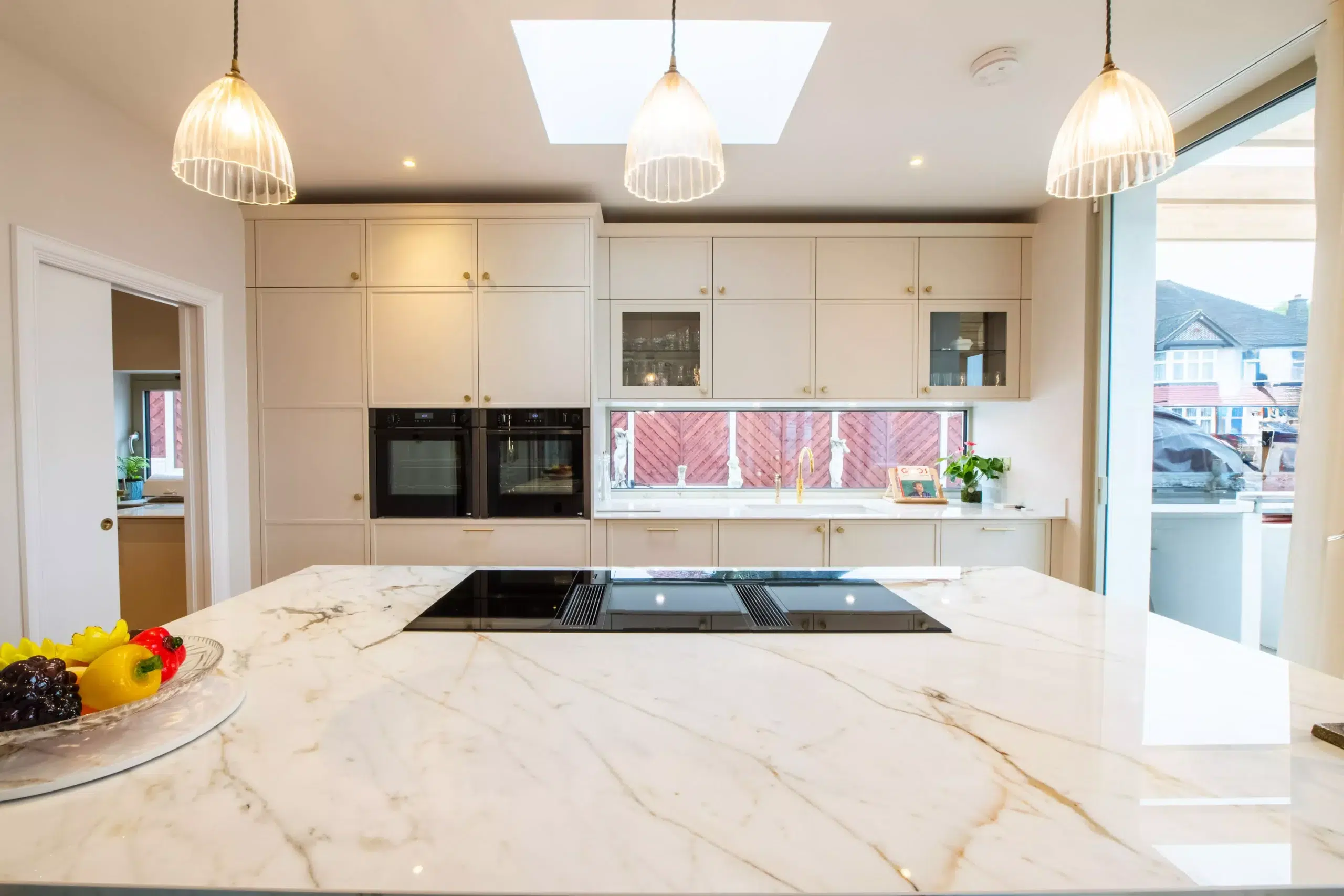
Open shelving has had a resurgence in recent years, and when used thoughtfully it can be both highly practical and visually striking. The key word is intention. Open shelves work brilliantly for items you use every day and are happy to display: everyday crockery, a collection of cookbooks, glassware, regularly used oils and condiments.
They are less forgiving of clutter than closed cabinetry, and the items on display require curation rather than accumulation. In our experience, a small run of open shelving within a larger scheme of closed cabinetry tends to perform better than open shelving throughout – the visual breathing space is welcome, but the concealment of a closed door remains essential for most households.
Storage Thinking for Different Kitchen Types
The Open-Plan Kitchen
In open-plan kitchen-living spaces, storage design takes on an additional dimension: what is stored here is potentially visible from the rest of the room. This makes a strong case for a combination of deep, closed cabinetry for everyday kitchen items and a more curated, display-led approach to any open or glazed units that face into the living area. A well-designed island can also incorporate a significant amount of concealed storage on the living-room-facing side – drawers, shelves, or wine storage – without making the kitchen feel cluttered.
The Galley or Linear Kitchen
In galley kitchens, every centimetre of wall space is precious. The priority is maximising the height of your units, running wall cabinets as high as the ceiling eliminates the dust-collecting gap above and adds meaningful volume. Pull-out pantry columns in any available gaps are invaluable, as are slim internal fittings that extract maximum utility from narrow drawers.
The Family Kitchen
Families with children have specific storage requirements that differ from households without. Lower drawers become accessible to small hands, which can be an advantage (children getting their own snacks) or a hazard (sharp knives). Child lock mechanisms can be fitted to selected drawers whilst leaving others freely accessible. A dedicated homework or charging station area within kitchen cabinetry, with an internal power socket for devices, is a feature that many family households find genuinely useful.
The Ornate Approach to Kitchen Storage
At Ornate Kitchens, we spend time at the beginning of every project understanding not just what a client wants their kitchen to look like, but how they want it to work. Storage is never an afterthought. We use three-dimensional design software to model the kitchen in detail, which means clients can see exactly how each unit will function before a single panel is ordered.
We work with premium internal fittings suppliers to specify drawer systems, organisers, and mechanisms that will perform reliably for decades, not just look impressive on a showroom visit. It is the difference between a kitchen that delights you every day and one that frustrates you within months. If you need further guidance, speak with one of our designers for expert advice tailored to your kitchen.
Frequently Asked Questions
How do I work out how much kitchen storage I need?
A useful starting point is a thorough audit of your current kitchen, what you own, what you use regularly, and what takes up space without earning it. Bring a detailed brief to your design appointment: how many people cook in the household, how often you do a large supermarket shop, whether you have specialist equipment (a stand mixer, a food processor, large Le Creuset pots), and what you currently find yourself wishing you had a proper place for. Your designer can then size your storage accordingly rather than working to a generic template.
Are deep drawers better than base cupboards?
For most items stored at base-unit level, yes – deep pan drawers offer significantly better accessibility than a base cupboard with a shelf. The exception tends to be for very tall items (chopping boards, baking sheets, large trays) where a vertical pull-out or a dedicated tray divider within a deep drawer is the better solution. We generally recommend drawers wherever possible for base units, reserving base cupboard doors for under-sink runs, bin units, and areas where drawer fronts would not be practical.
What is the best way to store pots and pans in a kitchen?
Deep pan drawers with fitted organisers are widely considered the most practical solution. Lids can be stored in a separate shallower drawer above the pan drawer, or in a lid organiser within the same drawer. For households with cast iron or heavy cookware, it is worth specifying drawer systems with a higher weight rating – premium brands such as Blum and Hettich offer drawer runners rated for 50kg or more, which comfortably handles even the heaviest collection.
How can I make the most of a corner in my kitchen?
The answer depends on your layout and corner configuration. For a standard L-shaped corner, a Le Mans pull-out or magic corner mechanism will make the space accessible and usable. In some layouts, wrapping a run of drawers around the corner entirely is possible and eliminates the problem rather than solving it with a mechanism. Your designer will advise which option suits your specific situation, but we would always encourage clients to invest in a quality corner solution rather than accepting a dead space or a basic carousel.
Can you add more storage to an existing kitchen?
Sometimes, yes, particularly if there is ceiling height that existing wall units do not reach, or if some base cupboards could be converted to drawers. However, the most impactful storage improvements tend to come as part of a full kitchen redesign, where everything is planned from scratch around your actual needs. Retrofitting storage improvements to a kitchen that was not designed with them in mind often produces compromised results. If your existing kitchen is not working for you, it may be worth exploring a new design rather than trying to patch the current one.
Do bespoke kitchens offer better storage than off-the-shelf ones?
In most cases, yes, significantly so. Off-the-shelf kitchens are designed to a standard module system, which means your storage is constrained by the fixed cabinet widths available (typically 300mm, 400mm, 500mm, 600mm). A bespoke or made-to-measure kitchen can fill every centimetre of your available space, including awkward alcoves, angled walls, and chimney breasts. The internal fittings can also be specified to match exactly what you need to store, rather than a generic range of inserts. The investment is greater, but so is the result.
Thinking about a new kitchen? Book a design appointment with Ornate Kitchens and discover how a properly considered storage design can transform the way you cook, eat, and live.