Handleless kitchens have become one of the defining aesthetics of the contemporary kitchen market. Their clean lines, uninterrupted surfaces and minimal visual noise appeal to homeowners who want a kitchen that feels calm, ordered and genuinely modern. But like any strong design statement, they are not universally the right choice. Whether a handleless kitchen suits your home depends on several factors, and it is worth thinking them through carefully before committing.
At Ornate Kitchens, we design and install kitchens across a wide range of styles, from bespoke in-frame and traditional painted kitchens to clean-lined handleless schemes. Here is our considered view on when a handleless kitchen works well, and when it might not.
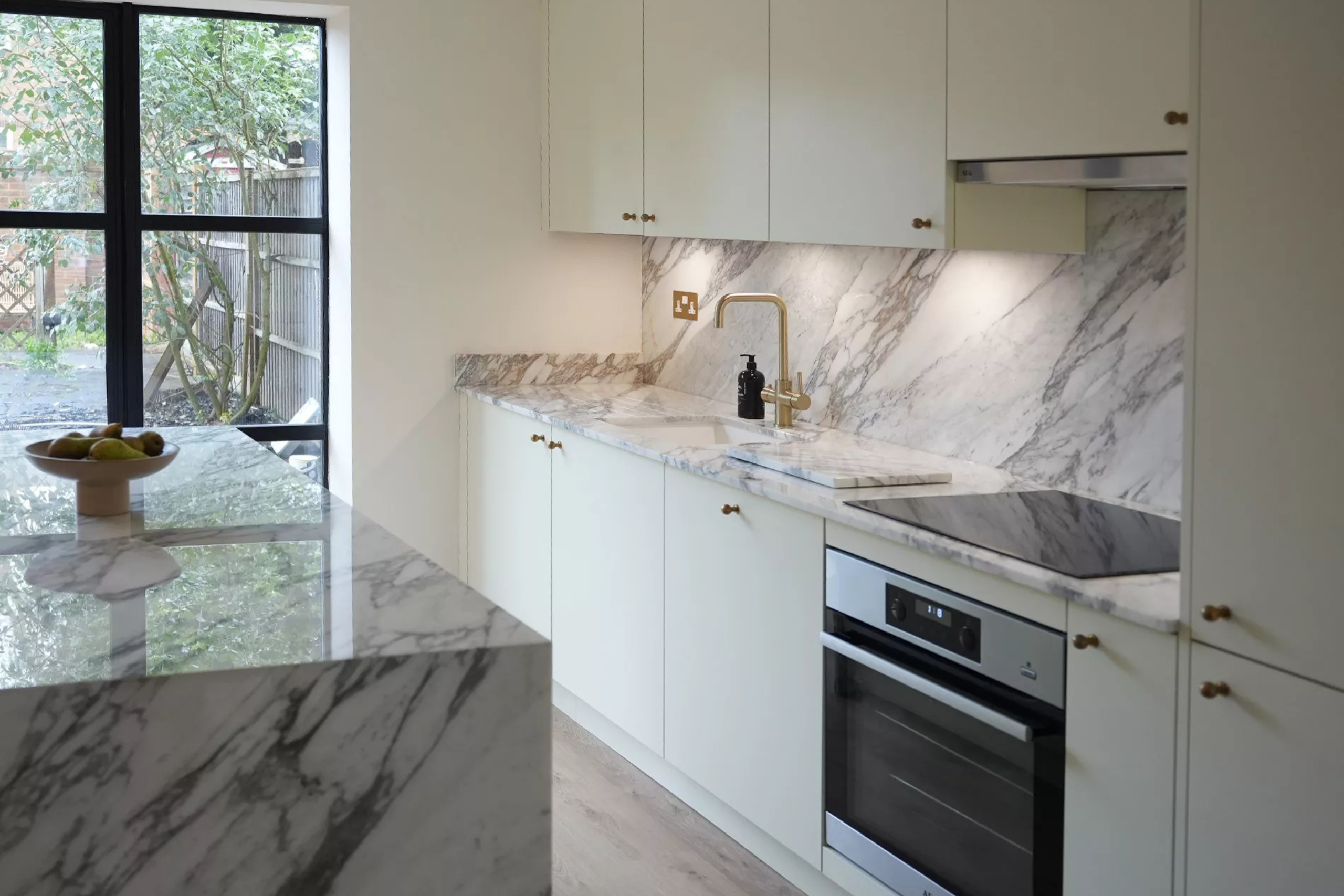
WHAT IS A HANDLELESS KITCHEN?
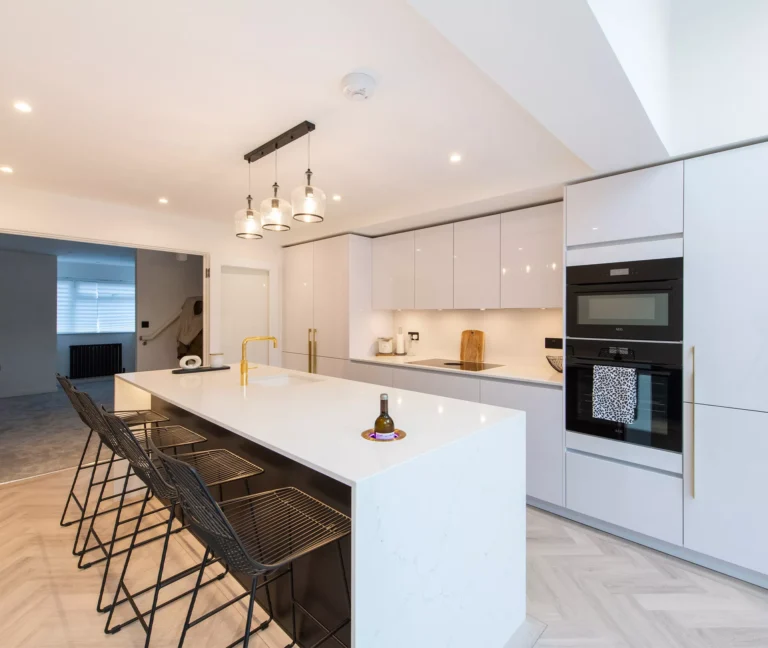
A handleless kitchen is one in which the door and drawer fronts have no visible external handles. Instead, doors and drawers are opened via one of two mechanisms: a recessed rail or J-pull profile that runs along the top or bottom of the door, creating a finger channel; or a push-to-open system, which uses a mechanism inside the cabinet that releases and opens the door when pressed. Both approaches eliminate the traditional handle from the exterior face of the cabinetry.
WHEN HANDLELESS WORKS WELL
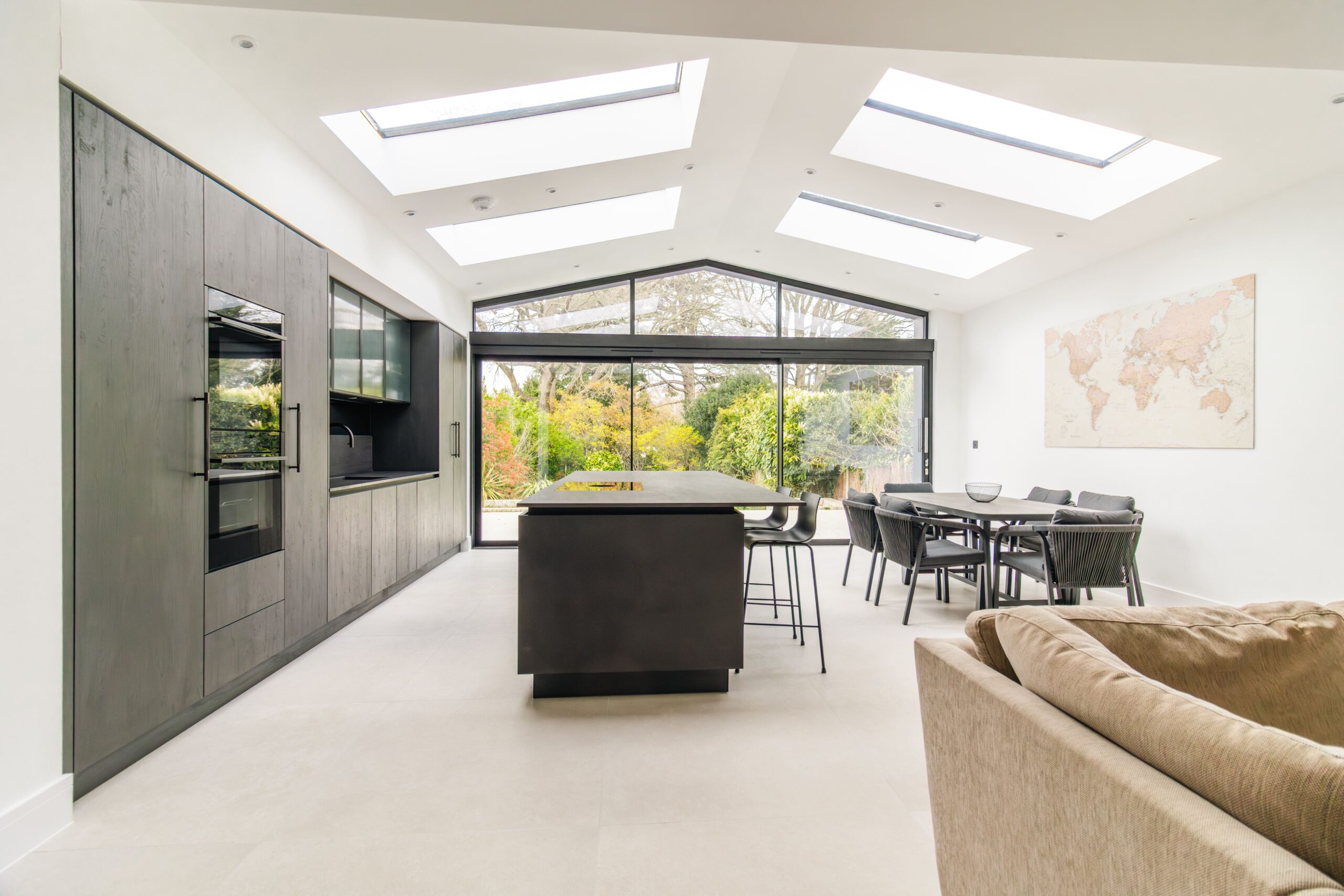
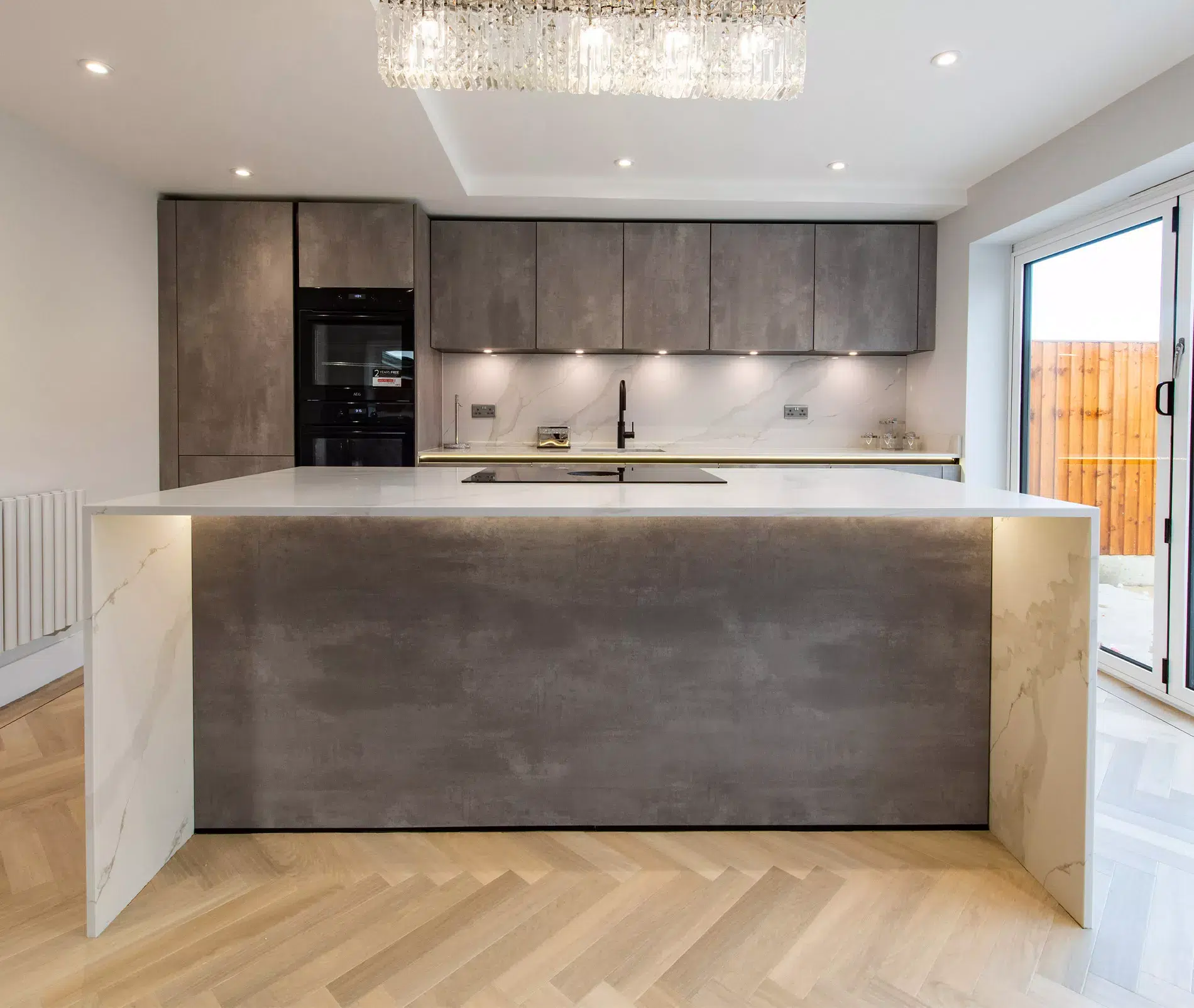
A handleless kitchen is at its best in spaces that suit a contemporary aesthetic. Open-plan kitchen-living rooms in modern builds, extensions with large areas of glazing, and kitchens where a clean, architectural quality is the goal all benefit from the handleless approach. The absence of hardware across a long run of cabinetry creates a coherent, unbroken visual line that is genuinely striking.
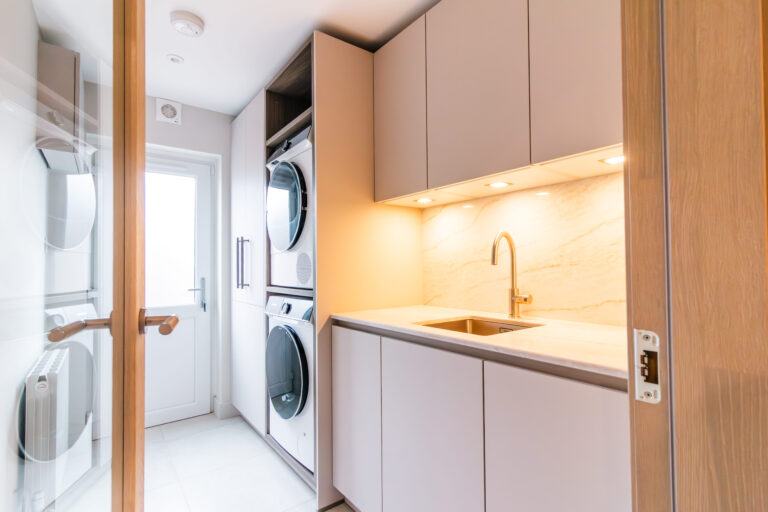
It also tends to work well in smaller kitchens. Without the projection of handles, the space around worktops and walkways feels slightly more generous, and there are no protrusions to catch on clothing or knock against when moving through the space.
If you are interested in exploring our range of kitchen styles, our designers can show you examples of handleless schemes in a variety of settings.
WHEN HANDLELESS MAY NOT BE THE RIGHT CHOICE
Period properties, particularly Victorian, Edwardian and Arts and Crafts homes, often do not sit naturally with the handleless aesthetic. The architectural character of these buildings, their proportions, their detailing, their materiality, tends to call for a kitchen with more warmth and craft. A bespoke in-frame kitchen with carefully chosen hardware almost always reads more authentically in these homes than a handleless scheme.
There is also a practical consideration. Push-to-open mechanisms require a degree of precision in their calibration. Over time, with heavy use, they can become less reliable and may require adjustment or replacement. The recessed rail handleless profile is generally more robust, but the finger channel can collect dust and grease more readily than a conventional handle. These are not deal-breakers, but they are worth knowing.
THE ROLE OF DOOR PROFILE AND MATERIAL
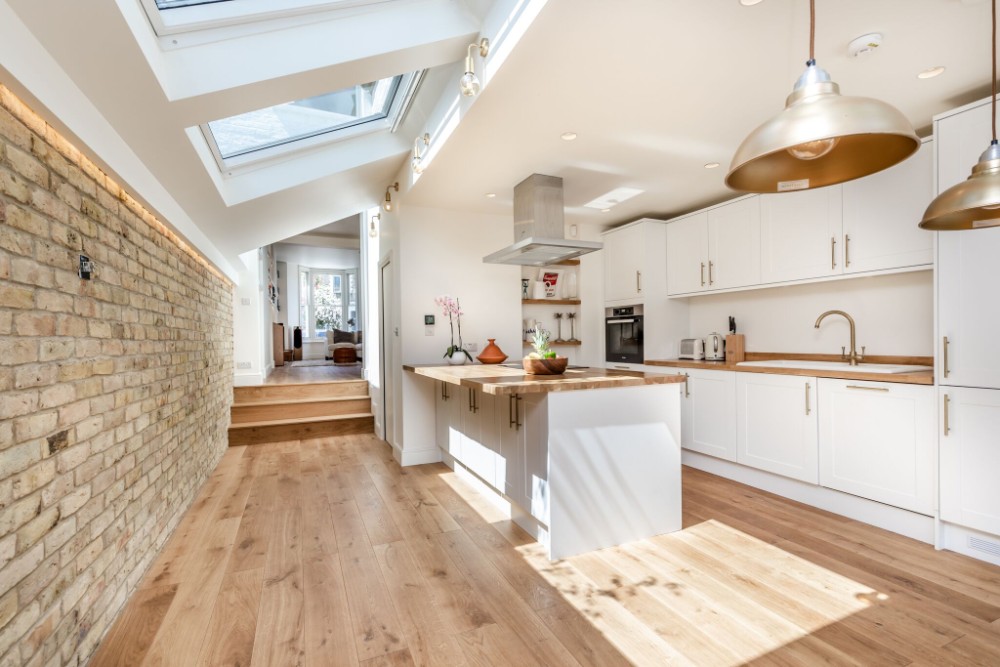
In a handleless kitchen, the door profile and material do significant visual work that is otherwise shared between the door and the handle. A flat-profile door in a matte lacquer finish in a carefully chosen colour is the classic handleless choice. The quality of the finish, its depth, its consistency across the run, becomes more important than in a kitchen where hardware draws the eye.
This is why the quality of the manufacturer matters considerably in the handleless segment. A handleless kitchen in a poor quality finish will look tired very quickly. Investing in a properly made, properly finished set of doors is the difference between a handleless kitchen that looks sharp in five years and one that looks shabby.
CAN YOU MIX HANDLELESS WITH HANDLED ELEMENTS?
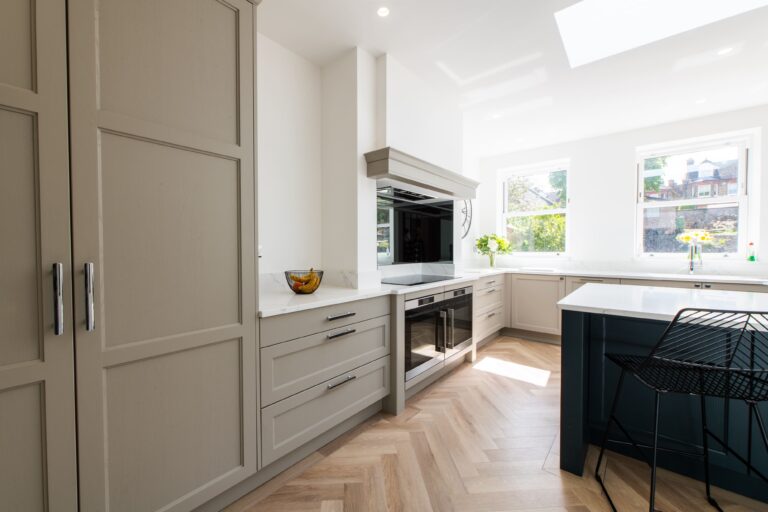
Yes, and this is an approach worth considering. A primarily handleless kitchen with a contrasting island that carries hardware creates an interesting tension in the design. Some homeowners choose handleless wall and base units but add a freestanding-style dresser or larder cabinet with traditional handles as a counterpoint. This blended approach can work very well if the overall design is considered rather than simply inconsistent.
If you are in the early stages of planning a kitchen renovation, we would encourage you to explore both handleless and handled options with your designer before making a final decision. The right choice is the one that genuinely suits your home, your aesthetic and the way you live.
FREQUENTLY ASKED QUESTIONS
Are handleless kitchens more expensive than kitchens with handles?
Not necessarily. The cost of a handleless kitchen depends on the same factors as any other kitchen: the quality of the cabinetry, the worktop material, the appliances and the complexity of the design. Removing handles saves a small amount on hardware cost, but the door profiles used in a handleless kitchen are often more complex to manufacture, so the net difference is usually marginal.
Are handleless kitchens practical for families with young children?
Recessed rail handleless kitchens are generally practical for families. The profile is easy to grip and robust. Push-to-open mechanisms require a degree of force that young children can find frustrating, and they are more prone to accidental opening. If you have young children, a recessed rail handleless option is preferable to a push-to-open system.
Do handleless kitchens date quickly?
Handleless kitchens have been part of the premium market for long enough that they are no longer a novelty, which is a good indicator of longevity. A well-chosen colour and quality finish will hold up over time. The plainer, more architectural examples tend to date less than those that chase very specific trends in colour or texture.
Can a handleless kitchen work in a period property?
It can, but it requires careful handling. A handleless kitchen in a Victorian or Edwardian home will always read as a contemporary insertion rather than something that belongs to the building. Whether that contrast is desirable or not is a matter of personal preference. Many homeowners in period properties prefer a kitchen that works with the character of the house rather than against it.
How easy is it to keep a handleless kitchen clean?
The flat, uninterrupted surfaces of a handleless kitchen are generally easy to wipe down. The recessed finger channel can collect grease and needs attention as part of a regular cleaning routine. Push-to-open mechanisms require occasional adjustment but do not have the same cleaning consideration. Overall, handleless kitchens are no more difficult to keep clean than kitchens with traditional hardware.