Natural light has a transformative effect on a kitchen. It makes spaces feel larger, more welcoming and more pleasant to spend time in. Yet it is one of the elements that is most often underplanned, with homeowners focusing heavily on units and worktops while leaving the question of light as an afterthought. Getting it right from the outset, during the design phase rather than after installation, is the approach that delivers the best results.
This guide covers the practical ways to maximise natural light in a kitchen, whether you are working with a generous rear extension or making the most of a more modest original footprint.
START WITH YOUR ORIENTATION
Before any decisions are made about glazing or layout, it is worth understanding how your kitchen relates to the sun’s movement throughout the day. A north-facing kitchen will receive soft, consistent light but little direct sun. A south-facing kitchen can flood with light but may also create glare and heat if not carefully managed. East-facing rooms are bright in the morning, west-facing in the afternoon and evening.
This information should inform where you position your primary work surfaces and seating areas, and where you place glazing. A well-considered kitchen design works with the building’s orientation rather than against it.
GLAZING: QUALITY AND POSITION MATTER MORE THAN QUANTITY
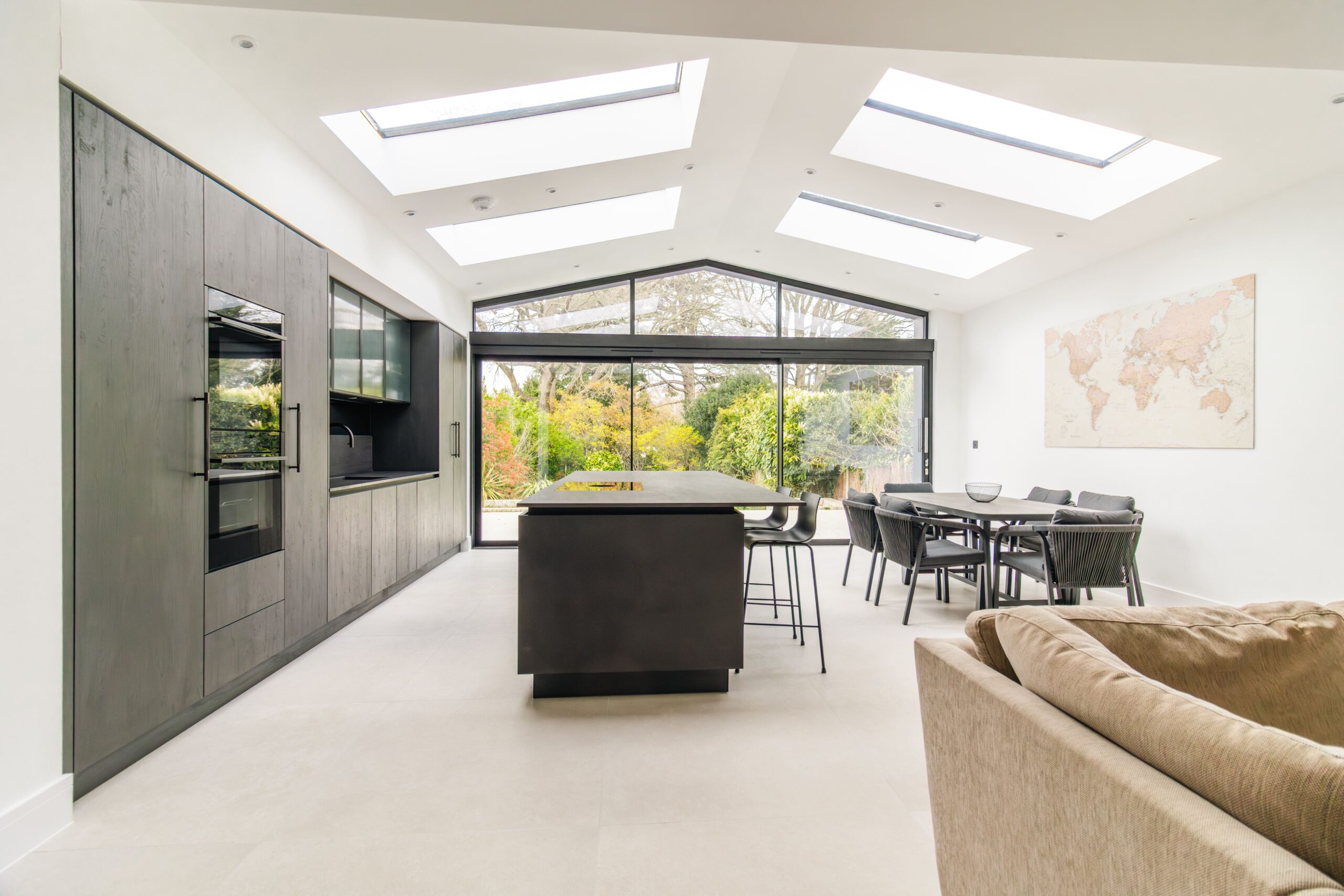
More glass does not automatically mean more usable light. A single well-positioned rooflight can transform a dark internal kitchen more effectively than a wall of rear glazing in a space that is already reasonably bright. Consider the following options:
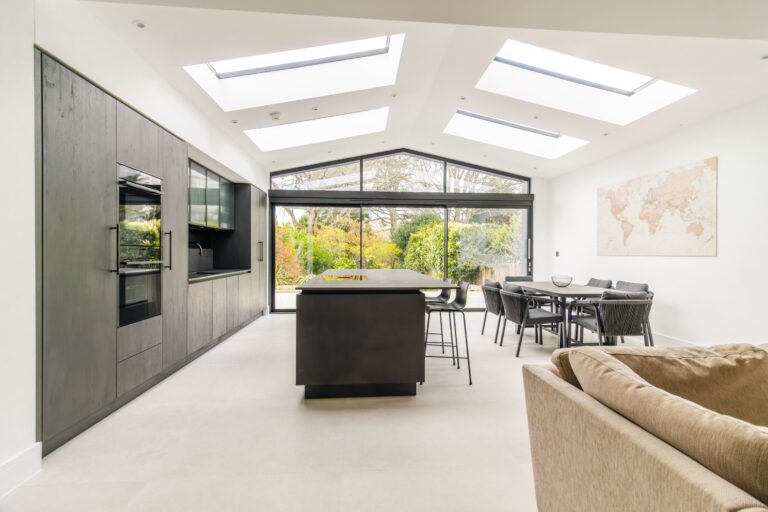
Rooflights and roof lanterns introduce light from directly above, which is the most even and glare-free source available. For single-storey extensions or flat-roof additions, this is often the most effective intervention available. Sliding or bifold doors to the rear bring in significant light when open, but are less effective when closed, particularly if the glazing faces north or east. Internal glazing, such as a glazed panel between a kitchen and a hallway or adjacent room, can allow borrowed light to travel through the house without structural changes.
COLOUR CHOICES THAT AMPLIFY LIGHT
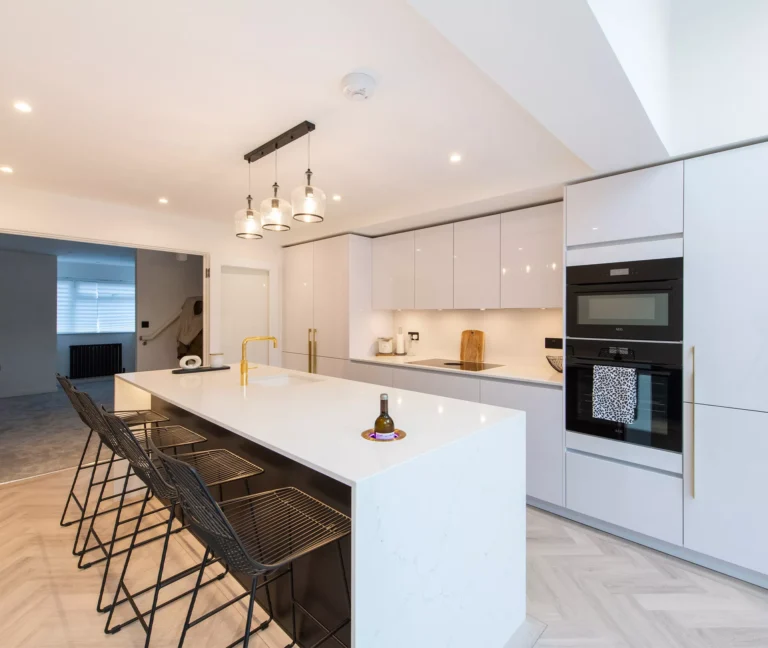
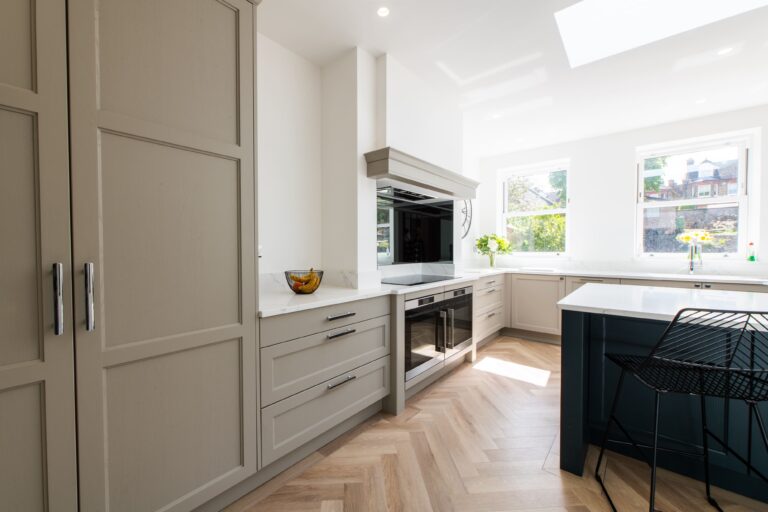
The colour of your cabinetry, walls and ceiling has a significant bearing on how light a kitchen feels. Pale cabinetry reflects light around the room rather than absorbing it. This does not necessarily mean white: soft off-whites, warm creams, pale greens and light greys all perform well and are more forgiving in changing light conditions than stark brilliant white.
At Ornate Kitchens, we offer a wide range of hand-painted finishes across our bespoke range. Many of our most popular light-enhancing colours are subtle and layered, with a depth that reads differently depending on the time of day and the quality of light in the room.
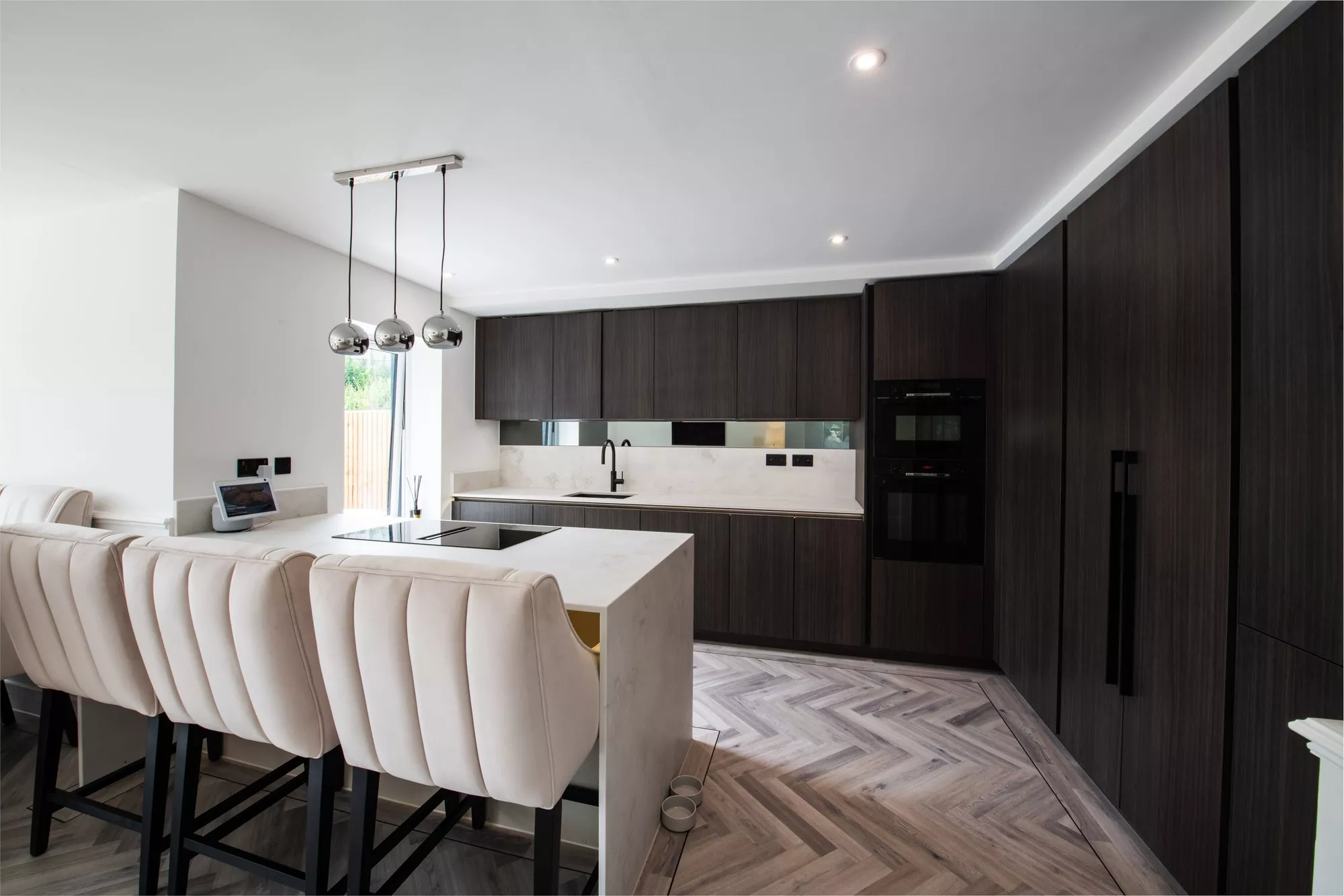
Dark cabinetry can still work well in a light-filled kitchen, but it requires more confidence in the design and is generally better suited to spaces that already have abundant natural light, or where the dark tone is used selectively, such as on a central island against lighter perimeter units.
REFLECTIVE SURFACES AND WORKTOPS
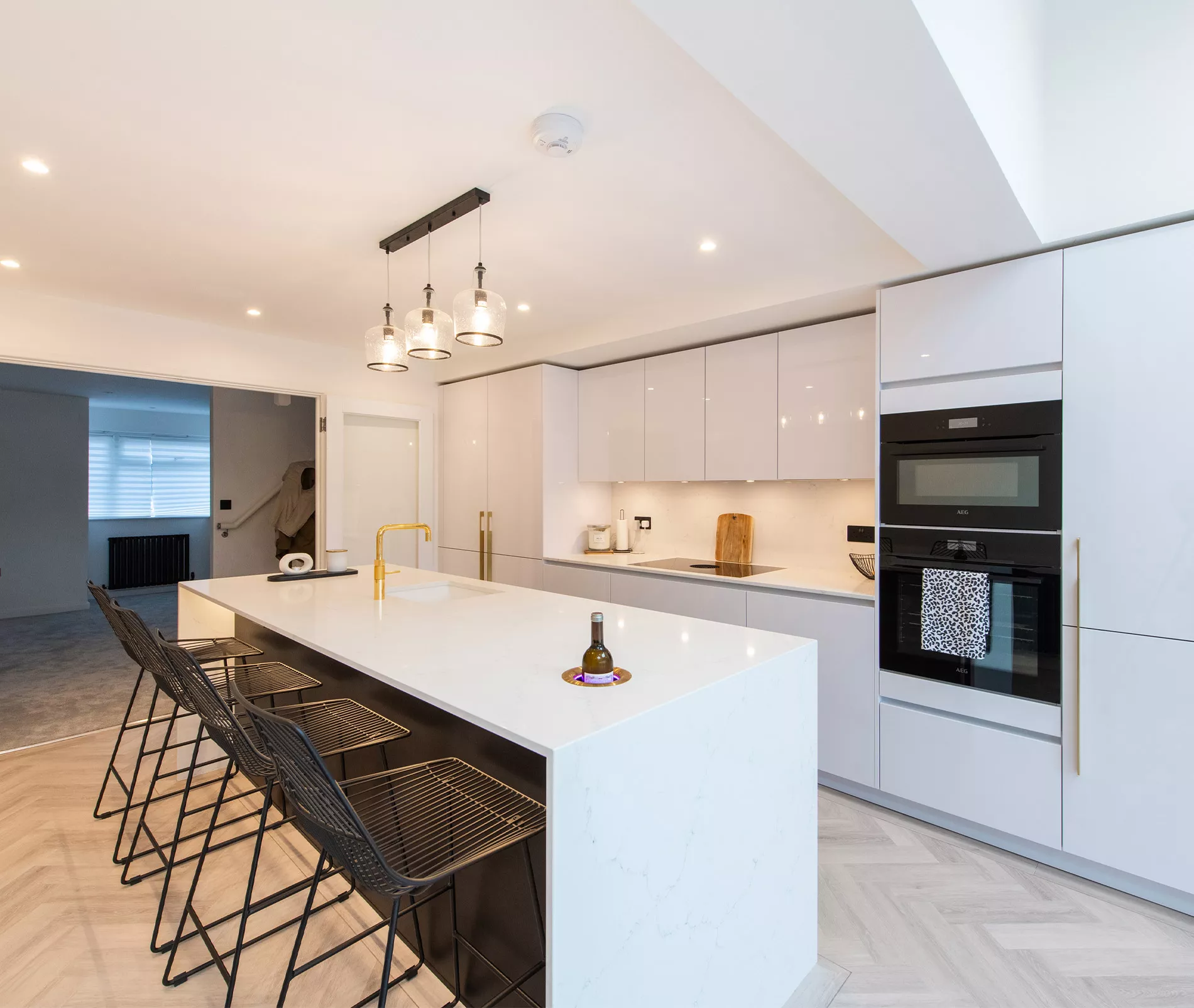
Beyond cabinetry colour, the materials you choose for worktops, splashbacks and flooring all affect how light moves through the space. Polished stone, gloss lacquer, mirrored splashbacks and light-toned tiles all contribute to a brighter room. Matt finishes absorb more light but can be warmer and easier to live with in terms of showing marks and fingerprints.
Our bespoke in-frame kitchens can be specified with a variety of worktop materials and splashback options to complement your light strategy. Speaking to your designer early about the full material palette, not just the cabinetry, will give you a more cohesive result.
LAYOUT DECISIONS THAT OPEN UP THE SPACE
How your kitchen is laid out affects how light travels through it. Upper wall cabinets, while practical for storage, block the light path from windows and can make a kitchen feel enclosed. Open shelving in place of some upper cabinets, or a run of units that stops below window height, allows light to travel more freely across the room.
If you are planning a kitchen renovation, it is worth considering whether the current layout is serving the light in the space. Sometimes a relatively modest reconfiguration, such as removing an upper cabinet run beside a window or repositioning an island, can make a significant difference to how the room feels during the day.
ARTIFICIAL LIGHT AS A COMPLEMENT, NOT A SUBSTITUTE
Good artificial lighting cannot replace natural light, but it can work with it to extend the sense of a bright, well-considered space into the evenings. Under-cabinet lighting, pendant lighting over an island, and warm-toned LED downlights all contribute to an atmosphere that feels consistent whether it is midday or midnight. Plan your artificial and natural light strategy together from the outset.
FREQUENTLY ASKED QUESTIONS
Does the direction my kitchen faces really affect the design?
Yes, significantly. Orientation determines the quality and quantity of natural light available at different times of day. A well-designed kitchen should work with this rather than ignoring it.
Are rooflights worth the investment?
For many kitchens, particularly single-storey extensions or those with limited rear glazing, a rooflight or roof lantern can be the single most effective way to introduce natural light. The impact on how the space feels is often remarkable.
Will pale-coloured cabinets show more dirt?
Quality paint finishes on bespoke cabinetry are durable and easy to maintain. A hand-painted finish from a reputable supplier will clean easily and stand up to everyday use. Marks are more visible on some finishes than others, which is worth discussing with your designer when choosing a colour.
Can I improve the natural light in my existing kitchen without an extension?
Yes. Replacing some upper wall cabinets with open shelving, choosing lighter cabinetry colours, adding a rooflight, or installing internal glazing between rooms can all make a meaningful difference without structural work.
Does worktop material affect how light feels in a kitchen?
It does. Polished or light-toned worktops reflect light across the room, while darker or more matt surfaces absorb it. This does not mean you cannot use dark worktops, but it is worth being aware of the effect and balancing it with lighter elements elsewhere in the design.