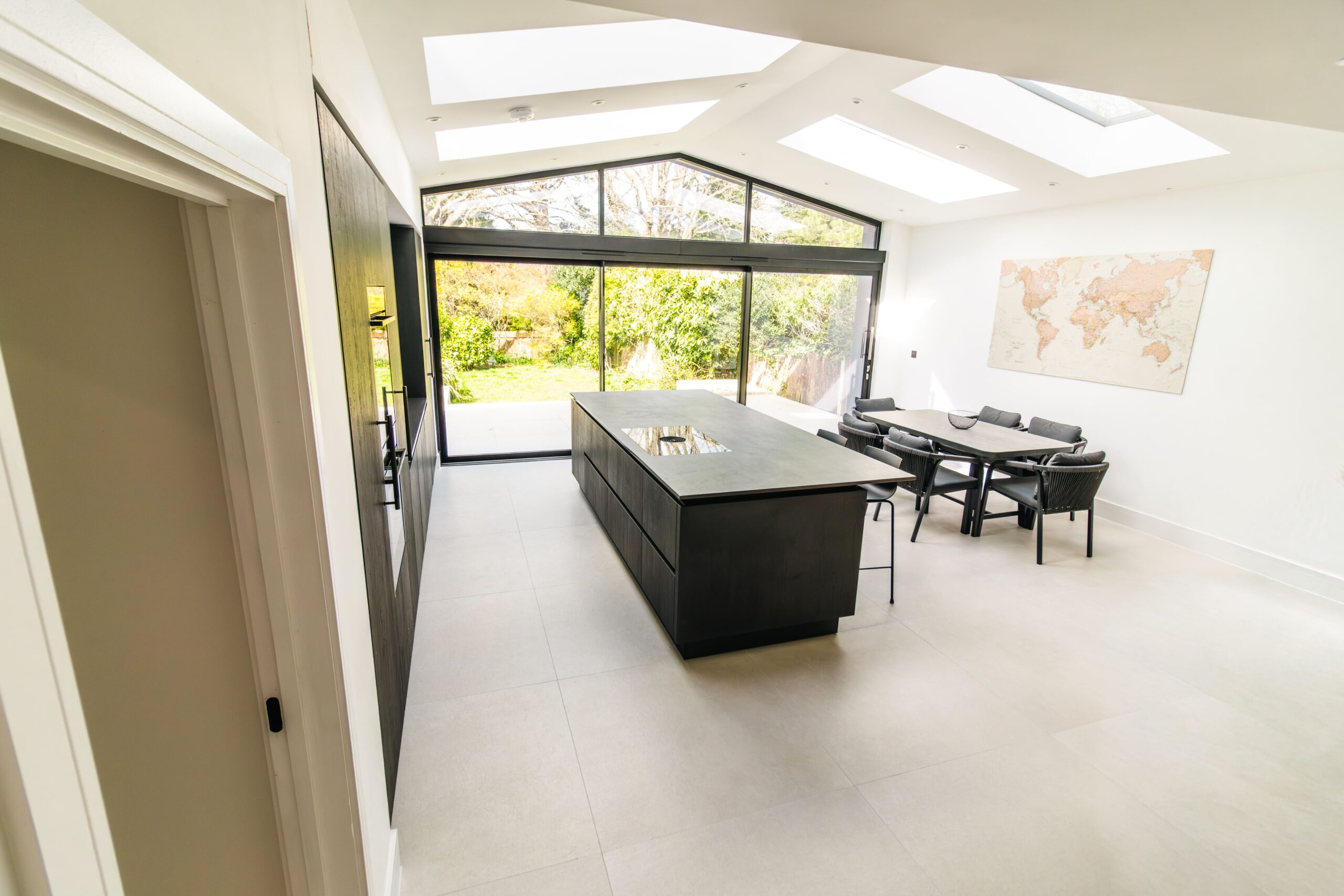
It is one of the most overlooked elements of kitchen design, and one of the most transformative. Get your lighting right, and a kitchen feels warm, functional, and alive at any hour of the day. Get it wrong, and even the most beautiful cabinetry and worktops will fall flat. In this guide, we explore how to approach kitchen lighting with the same intention and layered thinking that defines the best kitchen designs.
Why Kitchen Lighting Deserves Proper Planning
Kitchens are multi-functional spaces. Within a single room, you might be chopping vegetables under a bright overhead light, enjoying a relaxed dinner in softer ambient glow, or browsing a recipe on your phone whilst a single pendant casts warmth over an island. No single light source can do all of that well. The secret is layering, combining different types of lighting to serve each purpose, and being able to control the balance between them.
At Ornate Kitchens, lighting is considered from the very beginning of the design process, not added as an afterthought once the cabinetry is installed. The position of your units, the height of your ceilings, the reflectivity of your worktop surface, and the orientation of your kitchen all inform which lighting approach will perform best.
The Three Layers of Kitchen Lighting
1. Ambient Lighting is The Foundation
Ambient lighting is your baseline: the general illumination that fills the room when you first switch the lights on. In most kitchens, this comes from ceiling-mounted sources, recessed downlights, a large flush fitting, or in some cases, a decorative overhead pendant.
The key with ambient lighting is even distribution. You want to avoid harsh pools of bright light surrounded by shadow, which creates a clinical, commercial feel rather than the warm, considered atmosphere of a well-designed home kitchen. Recessed LED downlights on a dimmer circuit are a popular choice for this reason, they offer good coverage without dominating the ceiling visually.
2. Task Lighting. Where Function Meets Form
Task lighting targets the specific areas where you work. The most important of these is the worktop, where good illumination is a genuine safety requirement as well as a practical one. Under-cabinet LED strip lighting is the most effective solution, positioned at the front of the wall unit, it casts a clean, shadow-free light across the full surface below.
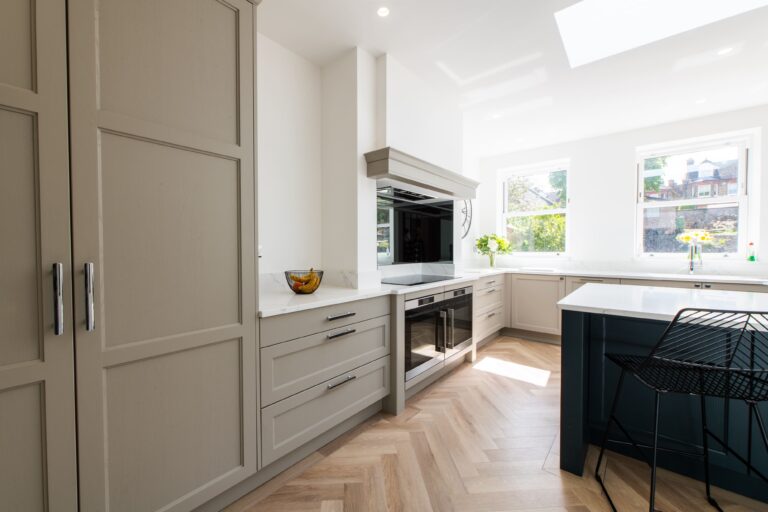
Task lighting also applies above the hob, where integrated extractor hoods with built-in lighting can work very well, and over the sink, which is another area where a dedicated light source makes a material difference to daily usability.
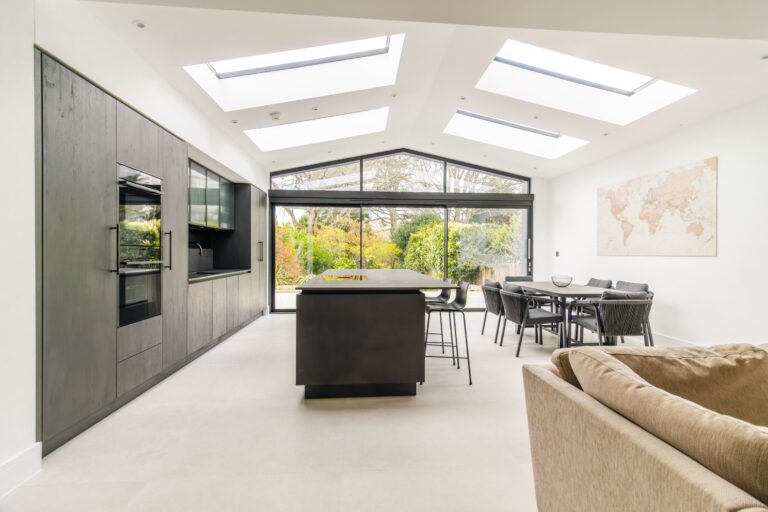
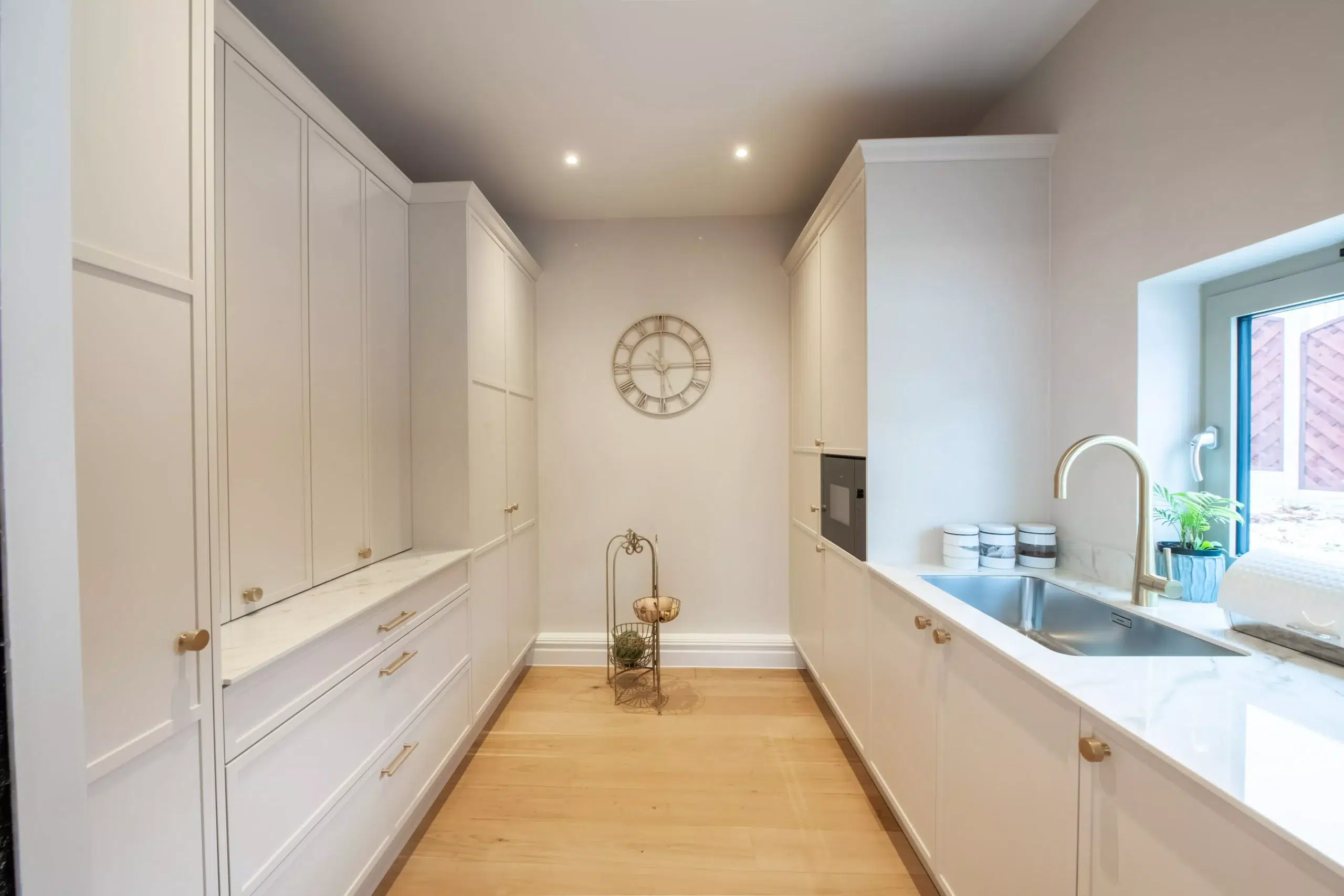
Interestingly, task lighting has become increasingly design-forward. Plinth lighting, LED strips set into the base of floor units, adds a floating effect to the cabinetry whilst also providing a subtle navigational light at floor level. It is a particularly effective feature in open-plan kitchen-dining spaces.
3. Accent and Decorative Lighting, Personality and Atmosphere
This is where kitchen lighting moves beyond function and into expression. Accent lighting draws attention to the elements of your kitchen that deserve to be noticed: the texture of a stone splashback, the contents of glazed wall units, the grain of a beautiful oak island leg.
Internal cabinet lighting, LED strips or small puck lights positioned inside glazed-fronted units, creates a warm, welcoming glow that reads beautifully in the evening. It is a feature common in high-end kitchen design and one that Ornate regularly incorporates into bespoke projects.
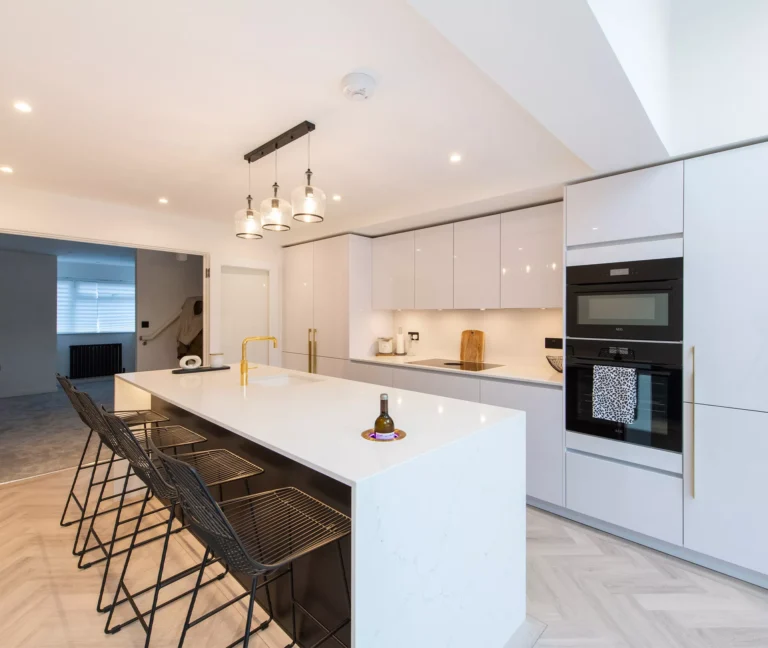
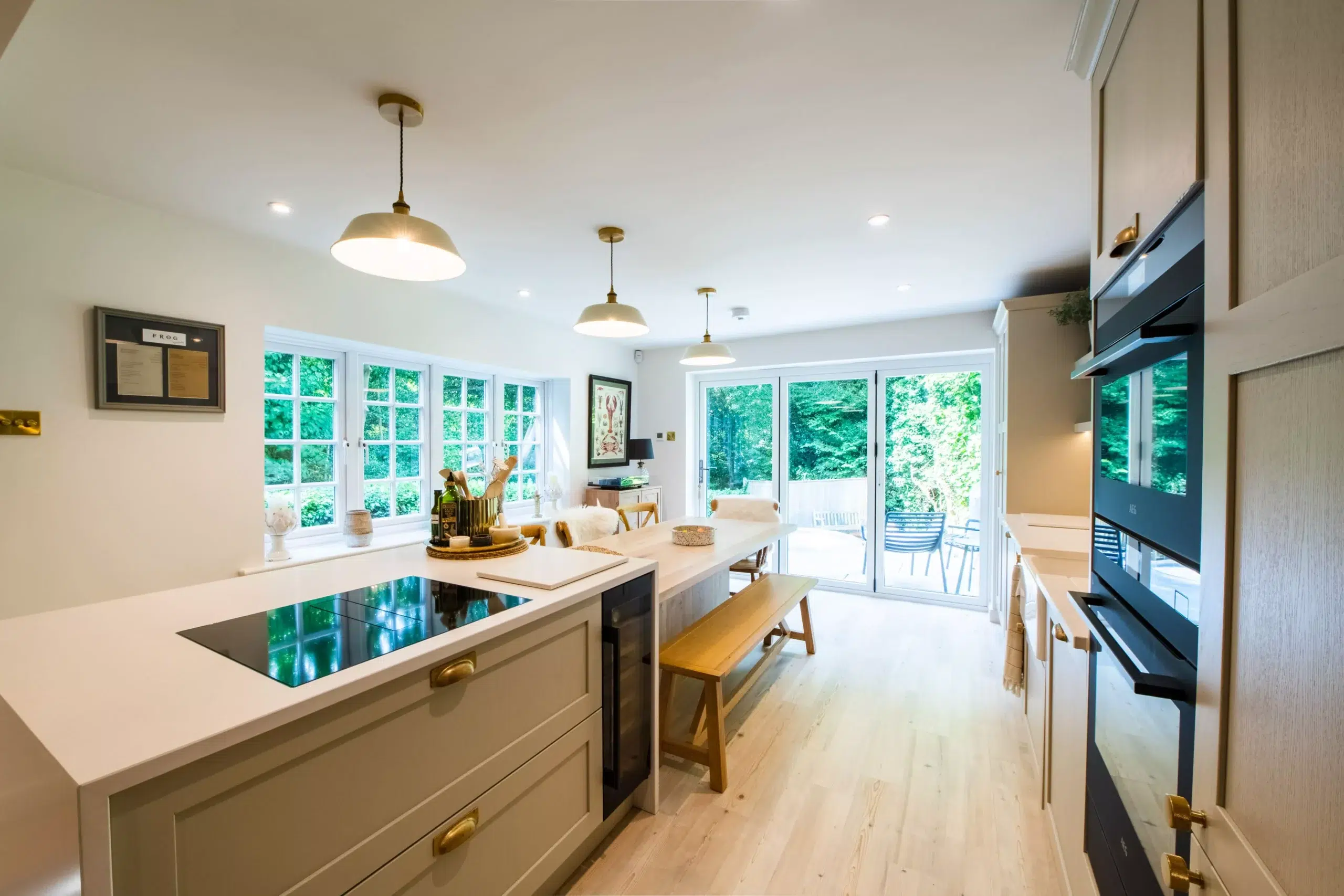
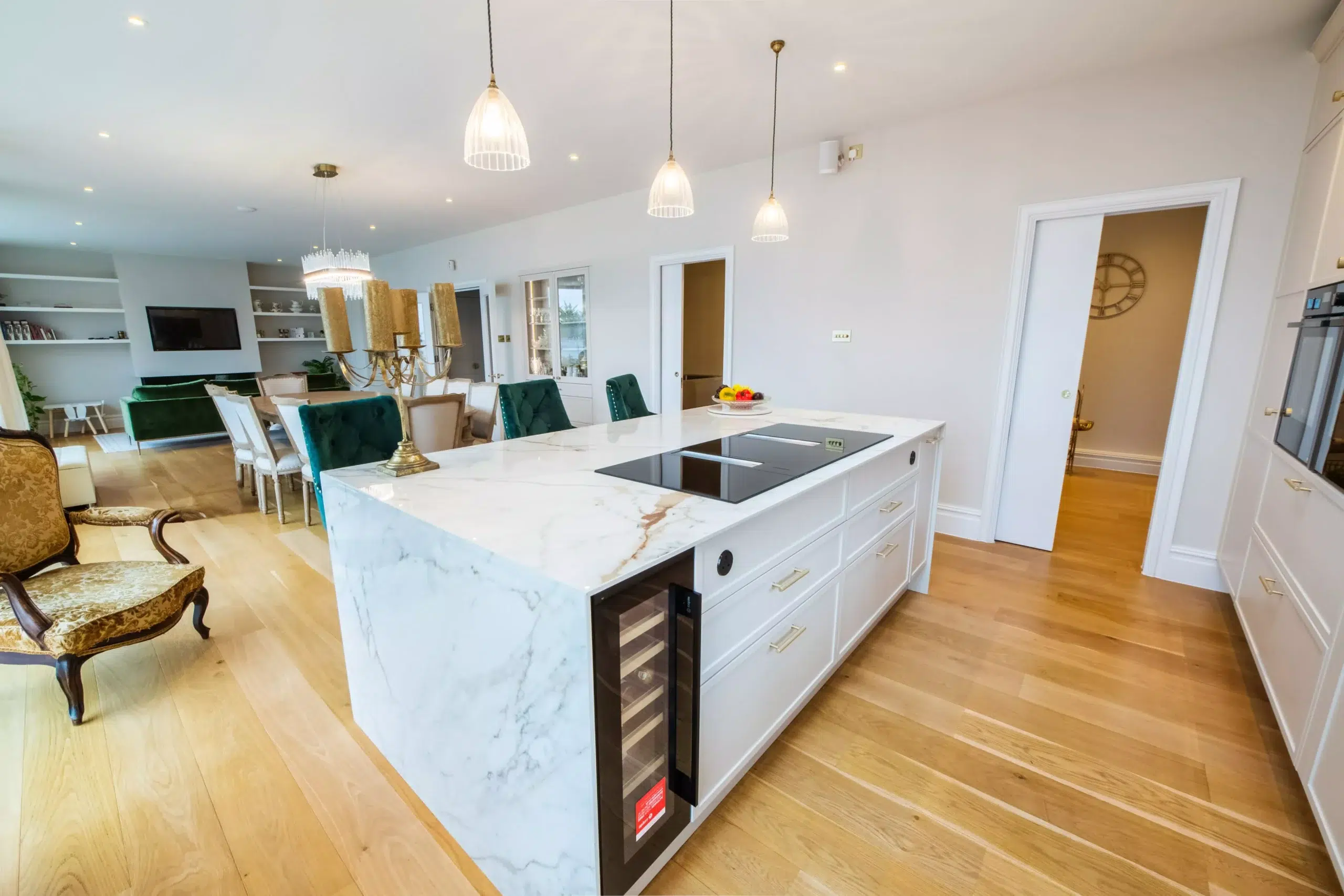
Pendant lights above a kitchen island or breakfast bar serve a dual purpose: they provide localised task lighting for that zone whilst also functioning as a strong visual statement. The choice of pendant, whether an industrial-style cage light, a sculptural ceramic shade, or a cluster of mouth-blown glass globes, communicates the aesthetic of the entire kitchen.
Getting the Colour Temperature Right
Colour temperature is measured in Kelvin (K) and has a profound effect on how a kitchen feels. The broad categories are:
Warm white (2700K–3000K): Creates a cosy, inviting atmosphere. Suits traditional and Shaker-style kitchens, and dining areas within open-plan spaces.
Cool white (3500K–4000K): Crisp, neutral, and functional. Popular in modern and contemporary kitchens where clarity over the worktop is a priority.
Daylight (5000K–6500K): Very bright and clinical. Generally not recommended for residential kitchens unless used in very targeted task areas.
The most sophisticated approach is to use warm white for ambient and accent circuits, and a slightly cooler tone for task lighting. This mimics the natural shift from warm evening light to the brighter, more focused light you need when cooking.
Lighting for Kitchen Islands
The kitchen island has become the centrepiece of modern open-plan living, and its lighting deserves particularly careful thought. Pendant lights are the dominant choice, but there are several considerations that are easy to get wrong:
Height: Pendants over an island should typically hang 70–80cm above the surface. Too high and they lose their visual impact; too low and they obscure sightlines and create glare.
Scale: The combined width of your pendant arrangement should account for roughly two-thirds of the island length. A single small pendant over a 2.4m island will look lost.
Number: Two or three pendants in a row tend to look more considered than a solitary light, particularly over longer islands. An odd number often creates a more natural, balanced composition.
Style coherence: Your pendant choice should speak the same visual language as your cabinetry. A sleek handleless kitchen calls for a pared-back metal or glass pendant; a painted in-frame kitchen invites something warmer, brushed brass, ceramic, or woven materials.
Smart Lighting and Controls
Modern kitchen lighting is increasingly integrated with smart home systems, and this is worth considering at the design stage rather than retrospectively. Smart lighting systems allow you to create pre-set scenes, ‘cooking mode’, ‘dining mode’, ‘morning routine’, at the touch of a button or through voice control.
Even without a full smart system, installing separate dimmer circuits for your ambient, task, and accent layers gives you significant flexibility. Being able to drop the ambient light to 20% and bring up the island pendants creates an entirely different feel in the same room, an underrated benefit that transforms how a kitchen functions in the evenings.
Common Kitchen Lighting Mistakes to Avoid
Relying on a single ceiling light for the entire room. This creates harsh shadows over worktops (particularly where wall units block the overhead source) and a flat, uninviting atmosphere.
Installing recessed downlights directly over the front edge of wall cabinets. This means the units themselves cast a shadow onto the worktop below, precisely where you need the most light.
Choosing decorative pendants without considering the practical light output. A beautiful shade is meaningless if it is so opaque that it provides no useful illumination.
Forgetting to include lighting in the design budget. Quality kitchen lighting, particularly dimmable systems with separate circuits, requires planning and professional installation. It should be budgeted for alongside your worktops and appliances, not squeezed in at the end.
How Ornate Approaches Kitchen Lighting
At Ornate Kitchens, lighting is part of the design conversation from day one. Our designers work with clients to understand how they use their kitchen throughout the day, which areas are most important to them, and what atmosphere they want to create. We then specify a layered lighting scheme that integrates seamlessly with the cabinetry layout, worktop choices, and architectural features of the space.
We collaborate with trusted electricians who understand kitchen environments and can install the systems to the standard our designs require. It is one example of the broader, end-to-end service that sets Ornate apart, every detail, handled.
Frequently Asked Questions
How many downlights do I need in a kitchen?
As a general guide, you need enough downlights to achieve an even spread of ambient light without dark patches. A rough starting point is one downlight per 1–1.5 square metres of ceiling area, but the exact number will depend on the lumen output of your chosen fittings and the reflectivity of your surfaces. Your kitchen designer or electrician should calculate this properly for your specific space.
What colour temperature is best for a kitchen?
For most domestic kitchens, a warm white of around 2700K–3000K works well for ambient and accent lighting, creating a welcoming atmosphere. If you prefer a slightly crisper feel over the worktop, you might choose 3500K for your under-cabinet task lighting whilst keeping the ambient circuits warmer. We would generally advise against anything above 4000K in a residential kitchen, as it can feel cold and overly clinical.
Do I need planning permission to install kitchen lighting?
In most cases, no planning permission is required for standard kitchen lighting installations within a domestic property. However, if your property is listed or within a conservation area, it is worth checking with your local planning authority before making significant changes. All electrical work should be carried out by a qualified electrician and notified to building control under Part P of the Building Regulations.
How high should pendant lights hang over a kitchen island?
The standard recommendation is for pendant lights to hang 70–80cm above the island surface. This height provides good task illumination without the pendants interfering with eye level when you are seated at the island on bar stools. If your ceiling is notably higher than average, you may be able to hang them slightly higher whilst still achieving a visually intentional look.
Can I add lighting to existing kitchen cabinets?
Yes, it is possible to retrofit under-cabinet LED strips and internal cabinet lighting to an existing kitchen, though the finish will typically be cleaner and the wiring better concealed when lighting is planned from the outset. If you are having a new kitchen installed, we strongly recommend integrating your lighting scheme at the design stage for the best result.
Is smart kitchen lighting worth it?
For many homeowners, yes, particularly if you use your kitchen throughout the day for different purposes. The ability to create pre-set scenes (bright and functional for cooking, warm and dim for dining) adds genuine daily value. That said, even a well-planned traditional lighting scheme with separate dimmable circuits will serve most households very well without the additional investment of a full smart system.
Ready to design your kitchen with lighting built in from the start? Book a design appointment with Ornate Kitchens and discover what thoughtful, end-to-end kitchen design looks like.